
Artificial intelligence has become one of those topics that seems impossible to avoid.
Depending on who you ask, AI is either the greatest productivity breakthrough of our generation or the beginning of the end of meaningful work. Most leaders seem to sit somewhere in the middle—curious about its potential, cautious about its risks, and unsure where it fits into their day-to-day reality.
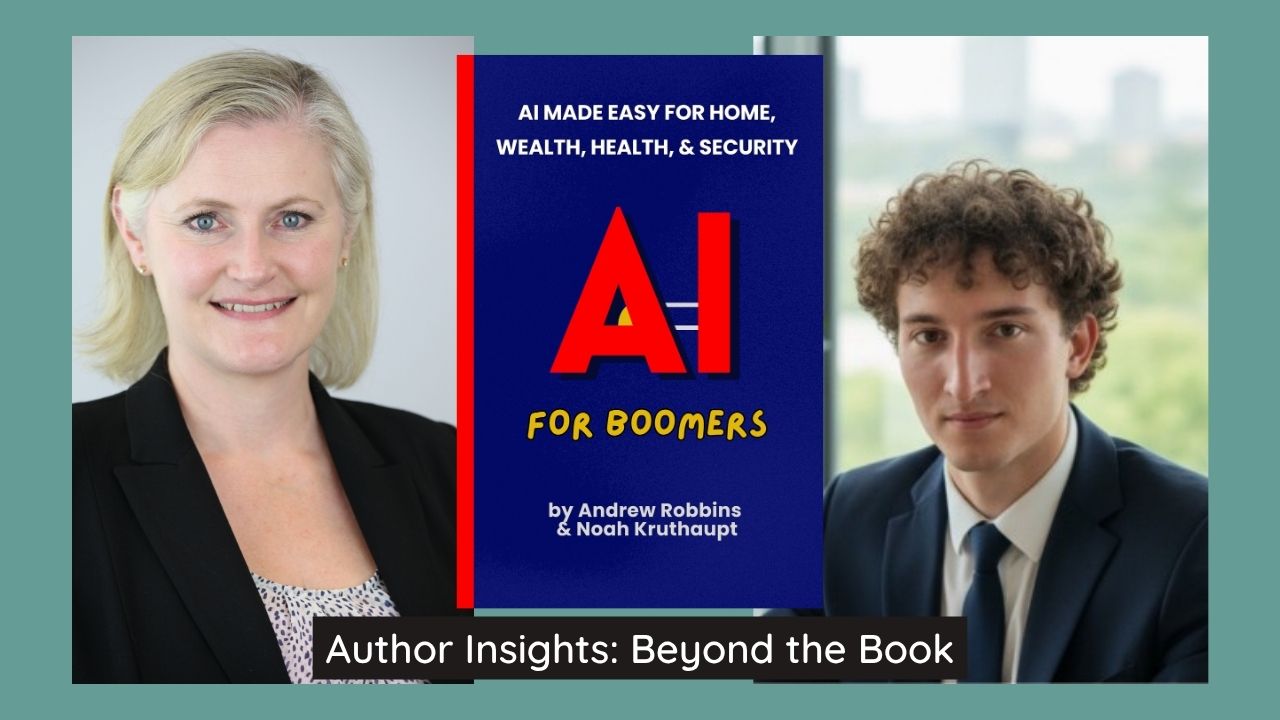
Recently, I sat down with Noah Kruthaupt, co-author of AI for Boomers: Protect Your Money, Health, and Time in the Age of AI. While the book is aimed at helping older adults navigate AI, I found myself reflecting on something much broader.
This wasn’t really a conversation about technology.
It was a conversation about leadership in the age of AI.
Leadership Has Always Been a Decision-Making Game
One statistic Noah shared during our discussion caught my attention. He suggested that a significant proportion of the tasks we perform each day involve repetitive processing, organisation, information gathering, and routine decision-making.
Whether or not we agree with the exact percentage, most leaders recognise the reality.
Many of us spend our days drowning in administrative decisions:
- Which email needs attention first?
- What information am I missing?
- How do I summarise this report?
- What should I prioritise next?
- What questions should I ask before making a decision?
The challenge isn’t a lack of intelligence.
It’s cognitive overload.
The modern leader isn’t suffering from an information shortage. They’re suffering from an information surplus.
The Real Opportunity Isn’t Productivity
Much of the AI conversation focuses on productivity gains.
Personally, I think that’s too narrow.
The more interesting leadership question is:
What happens when leaders can reduce cognitive load and redirect their attention toward higher-value thinking?
Throughout the interview, Noah repeatedly described AI as a tool for handling the busywork.
Not the judgment.
Not the wisdom.
Not the leadership.
The best leaders aren’t valuable because they can process information faster than everyone else.
They’re valuable because they can make sense of complexity, navigate ambiguity, build trust, and exercise sound judgment.
Human Judgment Becomes More Valuable, Not Less
One of the strongest messages from Noah was that AI should never be making important decisions on your behalf.
It can organise information, summarise options, identify patterns, and help you prepare.
But it shouldn’t decide.
As AI becomes increasingly capable, I believe this creates an interesting leadership paradox.
The more technology improves, the more important human judgment becomes.
Leaders who rely blindly on AI outputs will create risk.
Leaders who ignore AI altogether will create inefficiency.
The challenge is learning how to sit between those two extremes.
A Lesson from the Doctor’s Appointment
One example from the book involved someone using AI to prepare for a specialist appointment.
The technology helped organise symptoms, summarise concerns, and identify key questions to ask.
What struck me wasn’t the technology.
It was the preparation.
The AI didn’t replace the doctor.
It helped the patient show up more prepared.
Leadership works the same way.
Imagine applying that thinking to:
- Performance conversations
- Strategic planning sessions
- Stakeholder meetings
- Board presentations
- Difficult conversations
- Change initiatives
The value isn’t that AI does the thinking.
The value is that it helps us think more clearly before the conversation begins.
The New Leadership Skill: Better Questions
One of the frameworks Noah discussed was the HAT Method:
- History
- Attitude
- Task
In simple terms, better context produces better results.
The more I thought about it, the more it reminded me of leadership itself.
Great leaders don’t have all the answers. They ask better questions, provide context, and create clarity.
They help others think.
Whether we’re leading people or working with AI, the quality of the output is often determined by the quality of the input.
The Leadership Risk Nobody Is Talking About
Of course, there are legitimate concerns.
The rise of AI-powered scams, misinformation, deepfakes, and synthetic content means leaders will need stronger critical thinking skills than ever before.
Trust can no longer be based solely on what appears convincing.
It must be based on verification.
In a world where almost anything can be generated, leadership requires an even stronger commitment to discernment, ethics, and thoughtful decision-making.
The ability to pause, question, verify, and evaluate may become one of the most important leadership capabilities of the next decade.
Final Reflection
My biggest takeaway from this conversation wasn’t that leaders need to become AI experts.
It was that leaders need to become better stewards of their attention.
The organisations that thrive won’t necessarily be led by the people who know the most about technology.
They’ll be led by the people who understand where technology adds value, where human judgment is essential, and how to combine the strengths of both.
AI isn’t replacing leadership.
If anything, it’s making the uniquely human aspects of leadership more important than ever.
Watch the full interview with Noah Kruthaupt below.
Get the book here: https://amzn.to/4dEi3In
About Ros Cardinal
Ros Cardinal is an organisational development consultant, executive coach, and creator of the Women’s Leader Archetypes and Political Intelligence Compass frameworks. Through leadership consulting, coaching, speaking, and The Archetype Effect podcast, she helps leaders navigate influence, culture, power, and human behaviour in complex workplaces.
Book a chat with Ros.
Read next: What Great Leaders Actually Do
Uncover the true potential of your team with our two-minute Team Effectiveness quiz! Take the quiz now and gain access to the 7 crucial strategies used by successful leaders to inspire and motivate their teams.